
Topic
Body & Anatomy
Understanding how your body works is the starting point for every other health decision. This section provides accurate, age-appropriate anatomy education in plain language.
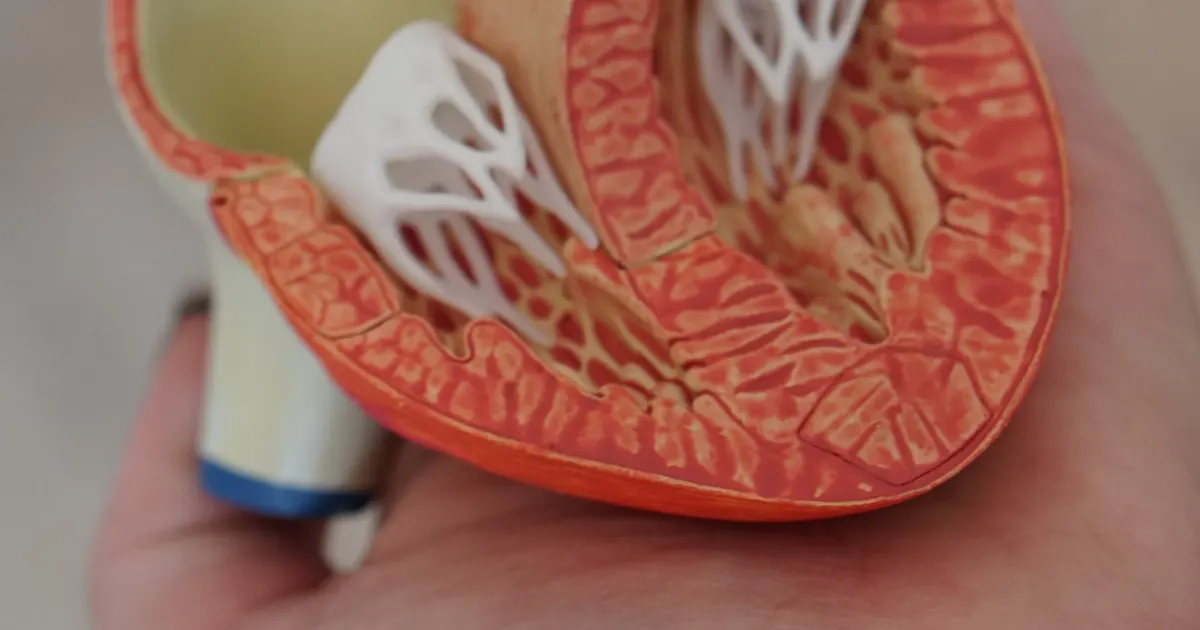
Why accurate anatomy knowledge is a health skill
Knowing how your body is built is the foundation of every other health decision you will make. It determines whether you can describe a symptom precisely, whether you notice a change early, and whether you understand what a clinician is telling you. Yet many people grow up with patchy, outdated, or shame-tinged information, and those gaps have practical consequences: vague descriptions lead to slower diagnosis, and uncertainty about what is typical leads to either unnecessary worry or ignored warning signs.
This section offers calm, clinically accurate explanations of the structures involved in reproduction and sexual function, in plain language, drawing on guidance from sources such as the Cleveland Clinic, the NHS, and the American College of Obstetricians and Gynecologists. There is nothing embarrassing about wanting this information. Health professionals discuss anatomy every day, and shared vocabulary makes care safer for everyone.
Start with the overview
For a map of the internal and external structures and what each one does, begin with female reproductive anatomy and male reproductive anatomy. These cover the organs, where they sit, and how they relate to the hormonal cycles and functions described elsewhere on the site.
Several guides clear up specific confusion. The distinction between the vulva and the vagina is the one most often muddled, and it matters clinically — symptoms affecting external skin are investigated differently from symptoms originating internally. We also cover the anatomy of the clitoris, described in clinical terms as part of standard anatomy education, and the evidence behind myths about the hymen.
Organs, function, and normal change
Other guides focus on individual structures and how they change over time: the cervix, which is central to screening; breast anatomy and normal changes across the cycle and across life; and the prostate, which commonly enlarges with age.
We also explain everyday signs of health. Discharge, for instance, is normal and varies through the cycle; the NHS advises that changes in colour, smell, or texture — particularly with itching or pain — are what should prompt a check. Our guides to what counts as normal vaginal discharge and understanding vaginal pH explain the underlying biology, and how erections work covers the vascular and nervous system mechanics in physiological terms.
Self-awareness supports early detection. Our testicular self-exam guide describes a simple routine for noticing changes in a part of the body where early detection makes a substantial difference to outcomes.
What people get wrong
"Vagina" as a catch-all term. The vulva is the external genital area; the vagina is the internal canal. Using them interchangeably makes it harder to describe where a symptom actually is.
Bodies should look a particular way. Vulvas, breasts, and testicles vary widely in size, shape, colour, and symmetry. Asymmetry alone is not a medical finding.
The vagina needs cleaning inside. It does not. Douching and internal cleansing products disrupt the natural balance and are associated with irritation and infection; external washing with water is sufficient.
The hymen indicates sexual history. It does not. The World Health Organization and partner UN agencies state that so-called virginity testing has no scientific or clinical basis and should be eliminated. Hymenal tissue varies naturally between individuals and changes for many ordinary reasons.
When to see a healthcare provider
- A new lump, swelling, hardness, or persistent ache in a testicle.
- A breast lump, skin dimpling or puckering, nipple change, or unexplained nipple discharge.
- A change in vaginal discharge — colour, smell, or amount — especially with itching, soreness, or pain.
- Sores, ulcers, growths, or persistent skin changes on the genital area.
- Bleeding between periods, after sex, or after menopause; persistent pelvic pain; or urinary changes such as difficulty starting or a weak stream.
Explore the guides below to build a clear picture of how your body works and what your own normal looks like.
This page is general education and is not a substitute for individualized medical advice.
Articles in this topic

What Is the Prostate Gland?
A plain-language guide to the prostate gland: where it is, what it does, how it changes with age, and when to talk to a healthcare provider.
4 min read

Vulva vs. Vagina: What Is the Difference?
The vulva is the external genitals you can see; the vagina is the internal canal inside the body. Here is a clear, clinical guide to the difference.
4 min read

Vaginal Discharge: What Is Normal?
Most vaginal discharge is normal and healthy. Learn what typical colour, texture and amount look like, how discharge changes across the cycle, and the warning signs that warrant a check-up.
4 min read

Understanding Vaginal pH Balance
A clear, clinical guide to vaginal pH balance: the normal acidic range, why it protects against infection, what disrupts it, and when to seek care.
4 min read

The Hymen: Myths and Facts
A plain-language look at what the hymen actually is, what it does, how it varies, and the common myths that surround it.
4 min read

The Cervix: What It Is and What It Does
A plain-language guide to what the cervix is, where it sits, and the role it plays in menstruation, pregnancy, childbirth, and cervical screening.
4 min read

Testicular Self-Exam: A Simple Guide
A clear, step-by-step guide to the testicular self-exam, including what is normal, what to look for, and when to contact a healthcare provider.
4 min read

Male Reproductive Anatomy Explained
A plain-language overview of male reproductive anatomy, covering the external and internal organs, what each part does, and what is considered normal.
4 min read

How Do Erections Work?
A clear, clinical guide to how erections work, from brain signals and nerve messages to blood flow through the penis and what counts as normal.
4 min read

Female Reproductive Anatomy Explained
A plain-language overview of female reproductive anatomy, covering the external vulva and the internal vagina, cervix, uterus, fallopian tubes, and ovaries.
4 min read

The Clitoris: Anatomy and Function
A plain-language overview of clitoris anatomy, including its external and internal parts, what it is made of, and the role it plays in vulvar health.
4 min read

Breast Anatomy and Normal Changes
Learn how breasts are built, what each part does, and which changes are a normal part of everyday life versus a reason to check in with a doctor.
4 min read